On this page
The Mediterranean diet has evidence for lowering some blood markers of inflammation. That supports a varied eating pattern, rather than a claim that blueberries, olive oil or another individual food will treat an inflammatory disease. A change in a blood marker also needs to be distinguished from fewer symptoms or fewer heart attacks.
Which eating pattern has been tested?
The strongest case in the reviews examined here is for Mediterranean eating. A meta-analysis of 33 randomized trials included 3,476 adults and found reductions in high-sensitivity C-reactive protein, interleukin-6 and interleukin-17 compared with control diets. It did not find significant effects for every marker studied, including conventional CRP and tumor necrosis factor-alpha.
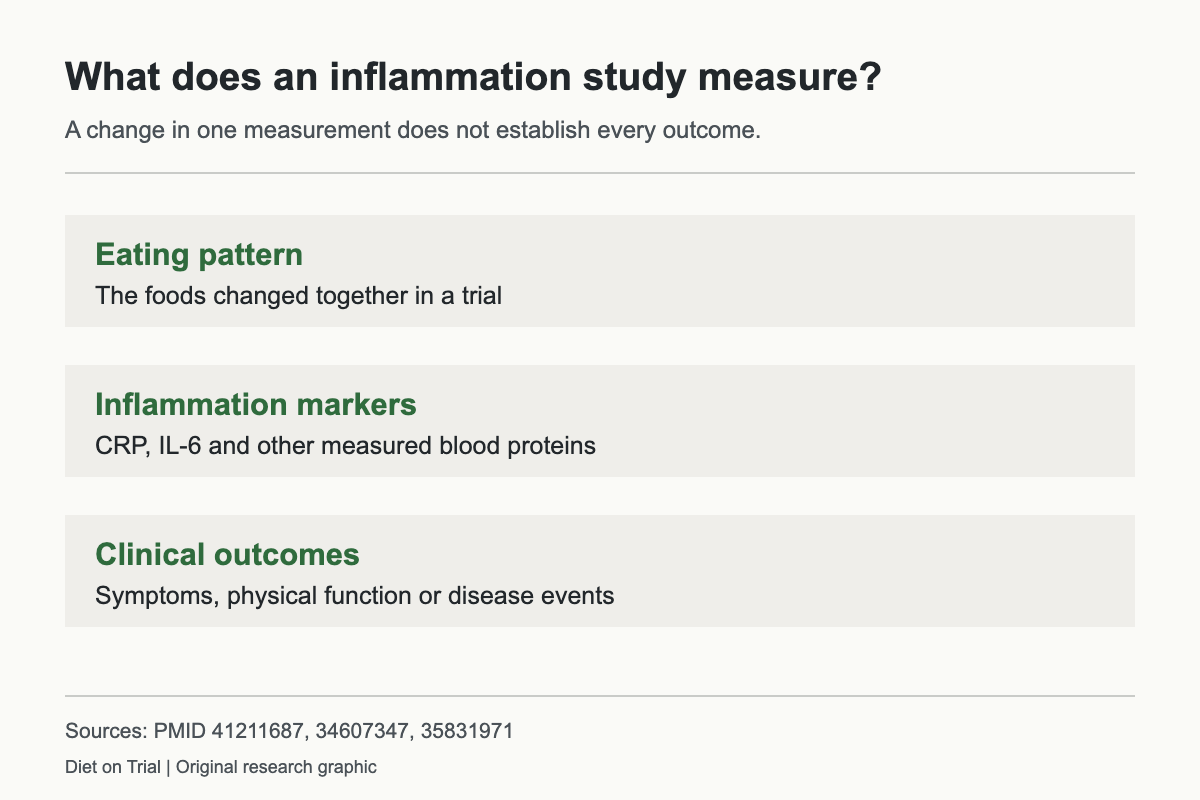
The label “anti-inflammatory” therefore needs a specific outcome attached to it. A study that measures IL-6 can answer a question about IL-6. It cannot establish that the same diet relieves every condition associated with inflammation.
Why do reviews give different answers?
Studies compare different diets, recruit people with different health conditions and measure different blood proteins. A 2022 systematic review examined 20 trials and called for more consistent research methods to connect dietary changes, inflammatory markers and clinical outcomes.
An earlier meta-analysis of 22 trials illustrates the difficulty. Its Mediterranean-diet estimate for CRP was a reduction of 1.00 mg/L, but the confidence interval ran from a reduction of 2.02 to an increase of 0.01 mg/L. Because that interval includes no effect, the estimate does not establish a clear CRP reduction. Results also varied substantially between studies.
| What the study measures | What that result can establish |
|---|---|
| A blood protein such as CRP or IL-6 | Whether that marker changed under the study conditions |
| Symptoms or physical function | Whether participants felt or functioned differently |
| Heart attacks, stroke or death | Whether those events differed during follow-up |
These outcomes are related research questions, but one cannot stand in for all the others. This distinction is especially useful when a food is marketed using the word “inflammation” without naming the measured result.
Can one food take the place of the diet?
The whole-diet trials do not answer that question. A Mediterranean intervention changes several foods together. Assigning its entire result to a bowl of berries would require a separate comparison that isolates the berries.
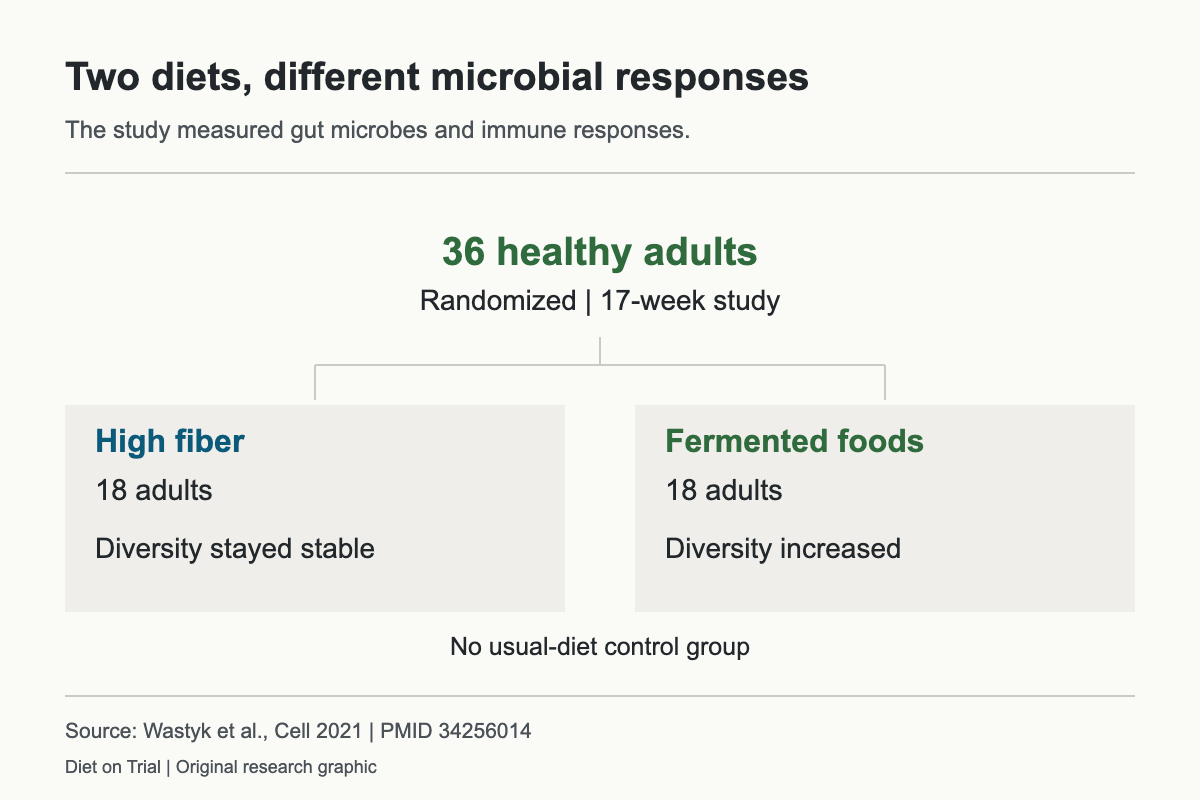
The Mediterranean diet and PREDIMED guide covers trials that measured cardiovascular events. For a different question, the fermented-food guide looks at a small feeding study that measured gut microbes and immune markers. Neither is evidence that a single ingredient treats an inflammatory disease.
Frequently asked questions
Does a lower inflammation marker mean a disease has improved?
Not necessarily. The study needs to measure symptoms, function or disease events to establish those outcomes. A blood test result alone does not report how a person feels.
Are blueberries proven to be the best anti-inflammatory food?
The whole-diet evidence discussed here does not rank individual foods. A claim that blueberries outperform other foods would need a comparison that tests that question directly.
Is there one standard anti-inflammatory diet?
The reviewed trials used different dietary protocols. Read the foods included in the intervention and the comparison diet, rather than treating the label as a single tested prescription.