On this page
In the small Keto-Med trial, HbA1c improved on both diets, with no difference between the ketogenic and Mediterranean-style diets. The ketogenic diet lowered triglycerides more while raising LDL cholesterol. For a person choosing between the two, blood sugar, cholesterol, food variety and the ability to keep eating that way all matter.
What did Keto-Med compare?
The randomized crossover trial enrolled 40 adults with prediabetes or type 2 diabetes. Each diet lasted 12 weeks, and the main analysis included 33 people with complete data. Both diets included nonstarchy vegetables and avoided added sugar and refined grains. The Mediterranean-plus diet also included legumes, fruit and intact whole grains; the ketogenic diet excluded them.
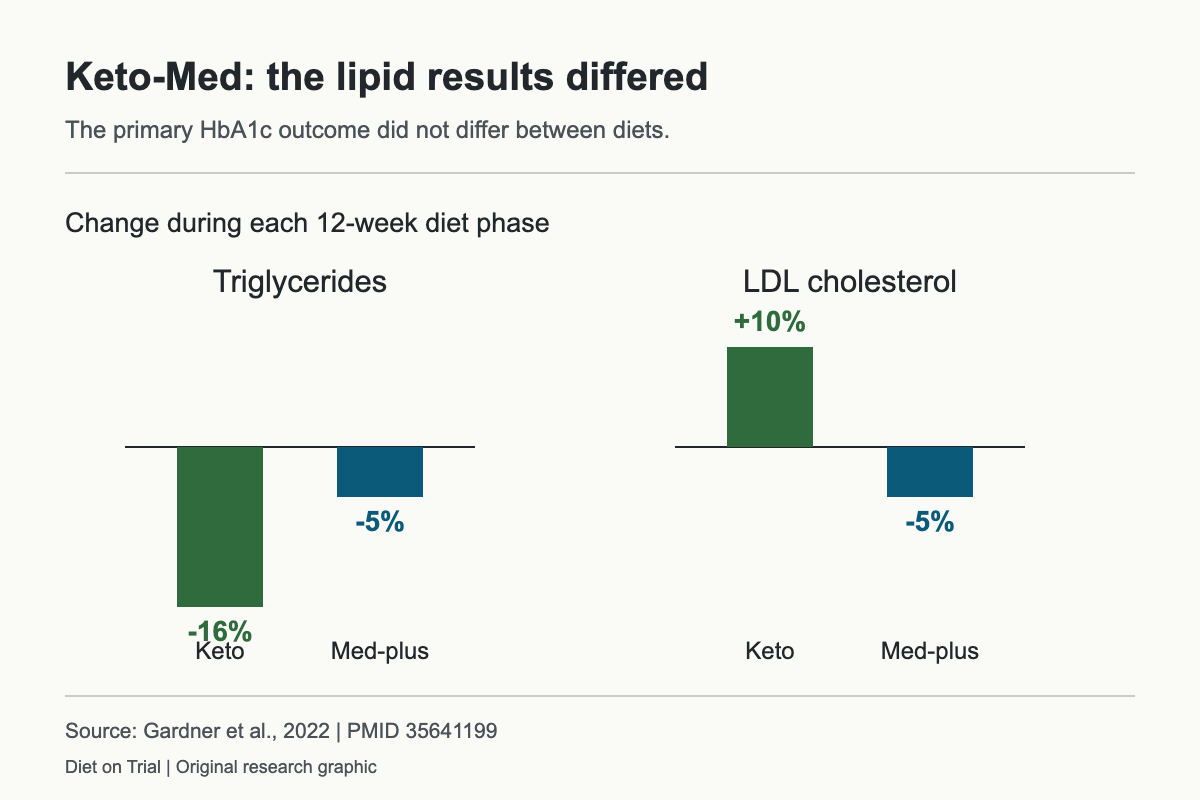
HbA1c, the primary outcome, did not differ between the diets. The blood-fat results moved in different directions:
| Change during each diet | Ketogenic | Mediterranean-plus |
|---|---|---|
| Triglycerides | 16% decrease | 5% decrease |
| LDL cholesterol | 10% increase | 5% decrease |
The ketogenic phase also had lower fiber intake. These are average trial findings, not a forecast for every person who cuts carbohydrates.
What does “staying on the diet” mean?
Food delivery and choosing your own meals are different conditions. The trial's adherence analysis measured eating during both. It assessed participants at the end of the food-delivery period, when they were preparing their own food, and after both diet phases had finished.
Average adherence was similar between the diets during the intervention, with a wide range among individuals. The main trial's later follow-up suggested that the Mediterranean pattern was easier to sustain. Neither report follows people for years, so it cannot establish lifelong adherence.
That is a practical reason to look beyond the first weeks. A diet that removes foods you regularly eat also needs workable replacements. The fiber guide explains why vegetables, legumes and whole grains need to be considered when reviewing fiber intake.
How should someone with diabetes use the findings?
Treat the study as a comparison of eating patterns, rather than instructions to change medication. NIDDK identifies low blood glucose as a central risk when food intake changes during fasting, particularly with insulin and medicines that can cause hypoglycemia. Agree on a medication plan with the prescribing clinician before a major dietary restriction. Do not change the dose of a diabetes medicine on your own.
For cardiovascular research over longer follow-up, the Mediterranean diet guide describes studies that counted disease events. Keto-Med primarily tested changes in laboratory measures over short diet phases.
Frequently asked questions
Did the ketogenic diet cure type 2 diabetes?
The trial did not establish a cure. It compared HbA1c and other measurements during two dietary interventions in people with prediabetes or type 2 diabetes.
Is lower triglyceride enough to decide which diet is better?
No. LDL cholesterol moved the other way in this trial. Judging the diets on one favorable measurement would leave out another measured result.
Was this a long-term ketogenic trial?
No. Each intervention lasted 12 weeks. Its findings should not be described as evidence of safety or adherence over many years.