On this page
Lutein and zeaxanthin are the yellow pigments of the macula. In AREDS2 (4,203 people at risk for advanced macular degeneration, followed for 5 years), 10 mg lutein plus 2 mg zeaxanthin did not significantly slow progression in the main analysis (HR 0.90, P = .12), but the pair replaced beta carotene, which raised lung cancer in former smokers. In healthy adults, supplements raise macular pigment density; effects on everyday vision are small and the evidence is low quality.
What are lutein and zeaxanthin?
Lutein and zeaxanthin are carotenoids, plant pigments that concentrate in the macula, the central part of the retina.
US adults eat little of them. The USDA's What We Eat in America survey (NHANES 2017 to March 2020) reports a mean intake of 1,630 µg (1.6 mg) a day for adults 20 and older, 1,489 µg for men and 1,762 µg for women. Simple arithmetic puts that average well below the combined 12 mg of lutein and zeaxanthin used in AREDS2.
Which foods contain the most lutein?
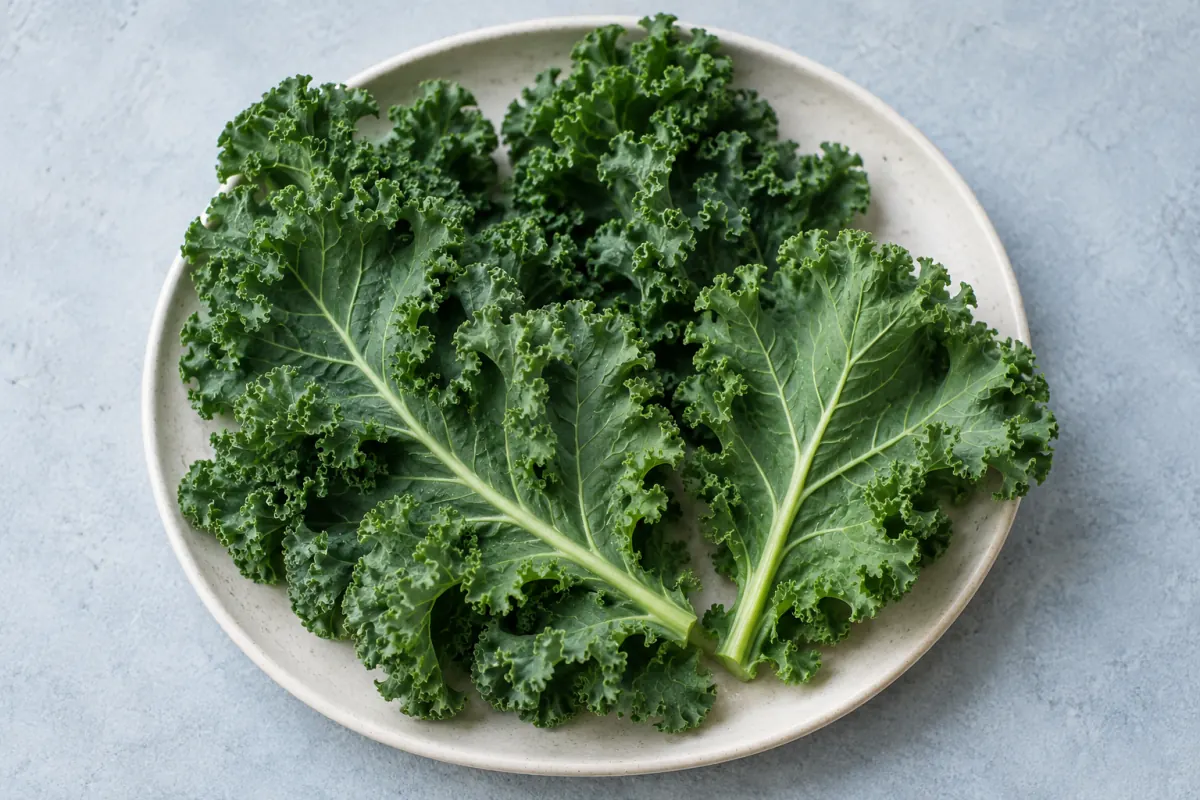
Leafy greens lead by a wide margin. USDA FoodData Central reports lutein and zeaxanthin as a combined value, so the table cannot separate the two.
| Food | Lutein + zeaxanthin (µg per 100 g) |
|---|---|
| Spinach, raw | 12,198 |
| Spinach, boiled | 11,308 |
| Kale, raw | 6,261 |
| Kale, boiled | 4,983 |
| Egg yolk, raw | 1,094 |
| Asparagus, boiled | 771 |
| Sweet corn, raw | 644 |
| Whole egg, raw | 503 |
| Carrots, raw | 256 |
Source: USDA FoodData Central, SR Legacy, nutrient "Lutein + zeaxanthin".
By these values, 100 g of raw spinach holds about 12 mg of the pair, about the combined 12 mg lutein and zeaxanthin dose used in AREDS2. Egg yolk carries about a tenth as much per gram.
What did AREDS2 find?
The Age-Related Eye Disease Study 2 (AREDS2 Research Group 2013) ran from 2006 to 2012 as a multicenter, randomized, double-masked, placebo-controlled trial with a 2x2 factorial design. It enrolled 4,203 people aged 50 to 85 at risk for progression to advanced age-related macular degeneration (AMD): bilateral large drusen, or large drusen in one eye and advanced AMD in the other. The arms were lutein 10 mg plus zeaxanthin 2 mg, DHA 350 mg plus EPA 650 mg, both, or placebo. Participants were also asked to take the original AREDS formula or accept a secondary randomization to versions without beta carotene, with lower zinc, or both.
Median follow-up was 5 years. The primary outcome was development of advanced AMD, counted by eye. Kaplan-Meier probabilities of progression by 5 years were 31% for placebo, 29% for lutein plus zeaxanthin, 31% for DHA plus EPA and 30% for the combination. The main comparison of lutein plus zeaxanthin against placebo gave a hazard ratio of 0.90 (98.7% CI 0.76 to 1.07, P = .12), which is not significant. The omega-3 comparison gave HR 0.97 (98.7% CI 0.82 to 1.16, P = .70).
Secondary analyses (AREDS2 Report 3, 2014) looked at lutein plus zeaxanthin against no lutein plus zeaxanthin. That exploratory comparison gave HR 0.90 (95% CI 0.82 to 0.99) for late AMD. A direct comparison with beta carotene gave HR 0.82 (0.69 to 0.96) for late AMD. The authors labeled these analyses exploratory.
Beta carotene produced the safety signal. Lung cancer occurred in 23 people (2.0%) in the beta carotene groups against 11 (0.9%) without it (nominal P = .04), mostly in former smokers. Because of that, the AREDS2 authors concluded that lutein plus zeaxanthin could be an appropriate carotenoid substitute in the AREDS formula.
The 10-year follow-up (AREDS2 Report 28, 2022) covered 3,882 participants, and all of them received the AREDS2 supplement with lutein and zeaxanthin during follow-up. Comparing the original randomized groups, the hazard ratio for late AMD was 0.91 (95% CI 0.84 to 0.99) for those originally assigned lutein/zeaxanthin versus those not assigned it. For lung cancer, the odds ratio was 1.82 (1.06 to 3.12) with beta carotene and 1.15 (0.79 to 1.66, P = .46) with lutein/zeaxanthin. The authors wrote that beta carotene nearly doubled lung cancer risk, whereas lutein/zeaxanthin showed no statistically significant increase. Bausch and Lomb supplied the supplements during the last 5 years of that follow-up.
AREDS2 also tested cataract (Report 4, 2013). Among 3,159 participants with their natural lens, lutein/zeaxanthin did not change the rate of cataract surgery overall (HR 0.96, 95% CI 0.84 to 1.10, P = .54).
Do lutein supplements help people with healthy eyes?
Supplements raise macular pigment in healthy people. A 2016 meta-analysis of 20 randomized trials (Ma 2016) found a weighted mean difference in macular pigment optical density of 0.09 (95% CI 0.05 to 0.14) in healthy subjects. The rise was larger when starting density was lower (r = -0.71).
Whether that pigment change alters daily vision is less clear. A 2023 review (Hu 2023) found visual acuity improved only in people with eye disease. A 2024 network meta-analysis (Hu 2024) rated its evidence as low quality, citing indirectness and potential publication bias.
Single trials point in different directions:
- Hammond 2014 assigned 115 young healthy adults to 10 mg lutein plus 2 mg zeaxanthin or placebo for 1 year. Chromatic contrast and photostress recovery improved against placebo. Glare disability did not improve significantly.
- Yao 2013 assigned 120 healthy drivers to 20 mg of lutein daily or placebo for 1 year. Best-corrected visual acuity showed no significant difference. Contrast and glare sensitivity improved, especially in dim light.
- Stringham 2017 followed 59 adults aged 18 to 25 for 1 year and reported better contrast sensitivity at 6 and 12 months. The placebo arm had only 10 people, so the comparison is thin.
A 20-day dry eye trial (Goh 2024) tested a combination of lutein 6 mg, zeaxanthin 1 mg and elderberry extract 100 mg in 110 enrolled participants, with 101 analyzed. Symptom scores fell 52.2% in the treated group, but the active product differed from placebo in all three ingredients, the trial was short, and some authors were employed by the manufacturers. The result cannot be attributed to lutein.
Verdict: supplements reliably raise macular pigment. Whether that changes daily vision for healthy people is not settled.
How much lutein is in supplements, and how is it regulated in Korea?
Korea's Ministry of Food and Drug Safety (MFDS) sets a standard for marigold flower extract. The approved claim reads: "May help eye health by maintaining macular pigment density, which can decrease with aging." The daily intake is 10 to 20 mg as lutein, and a finished product must contain 80 to 120% of the labelled amount. Four cautions are mandatory:
- Infants, children, pregnant women and breastfeeding women should avoid it.
- Smokers should consult a professional.
- Excess intake may temporarily turn the skin yellow.
- Anyone who has an adverse event should stop and consult a professional.
Two examples of individually approved ingredients have different doses and claims. Each approval applies only to the named company's ingredient. Daehan Chemtech's lutein-zeaxanthin complex extract (approval 2018-4) is approved at 10 to 20 mg a day of lutein plus total zeaxanthin for the macular pigment claim. In April 2026 the approval added a dry eye claim at 20 mg a day. Fine BS's marigold extract with zeaxanthin (approval 2025-7) is approved at 12 mg a day of lutein plus total zeaxanthin.
Is lutein safe?
No formal upper intake level has been set for lutein. Regulators have assessed lutein used as a food additive instead. The European Food Safety Authority (EFSA 2010) set an acceptable daily intake (ADI) of 1 mg per kg of body weight a day, which works out to 60 mg for a 60 kg adult. In 2018, JECFA set a group ADI of "not specified" for lutein and lutein esters from marigold and synthetic zeaxanthin, replacing its 2004 value of 0 to 2 mg per kg. These food-additive assessments are not recommended supplement doses.
Excess intake can turn the skin yellow, an effect that the Korean standard lists as a caution. In the AREDS2 10-year follow-up, the lung cancer difference for lutein/zeaxanthin was not statistically significant. Beta carotene, not lutein, carried the lung cancer signal. Korea still asks smokers to consult a professional before use.
People who take medication or have an eye condition should check any supplement with their doctor.
Frequently asked questions
How much lutein should I take a day?
AREDS2 used 10 mg of lutein plus 2 mg of zeaxanthin. Korea's standard allows 10 to 20 mg of lutein a day, and the individually approved ingredients are 12 mg and 10 to 20 mg of lutein plus zeaxanthin. For comparison, average US adult intake from food is about 1.6 mg a day.
Is it better to get lutein from food or supplements?
Food supplies the pair too: 100 g of raw spinach holds 12,198 µg. In AREDS2 Report 4, people in the lowest quintile of dietary lutein/zeaxanthin had HR 0.68 (95% CI 0.48 to 0.96) for cataract surgery, but the supplement did not change the rate overall. The trials that raised macular pigment used supplements at 10 to 20 mg. Average US intake from food is about 1.6 mg a day.
Should smokers avoid lutein supplements?
The lung cancer signal in AREDS2 came from beta carotene, mostly in former smokers. Lutein/zeaxanthin showed no statistically significant increase (OR 1.15, 95% CI 0.79 to 1.66). Korea's mandatory caution still tells smokers to consult a professional, so smokers should talk with their doctor before starting.
Does lutein help with dry eyes?
The only trial in the evidence set was a 20-day study of a combination product with elderberry extract, and its authors included employees of the manufacturers. That design cannot isolate lutein. Korea added a dry eye claim for one company's ingredient at 20 mg a day in April 2026, and the claim does not extend to other lutein products.
Sources
- Age-Related Eye Disease Study 2 Research Group. Lutein + zeaxanthin and omega-3 fatty acids for age-related macular degeneration: the AREDS2 randomized clinical trial. JAMA. 2013. PubMed 23644932
- Chew EY, et al. Secondary analyses of the effects of lutein/zeaxanthin on age-related macular degeneration progression: AREDS2 report No. 3. JAMA Ophthalmol. 2014. PubMed 24310343
- Chew EY, et al. Lutein/zeaxanthin for the treatment of age-related cataract: AREDS2 randomized trial report no. 4. JAMA Ophthalmol. 2013. PubMed 23645227
- Chew EY, et al. Long-term outcomes of adding lutein/zeaxanthin and omega-3 fatty acids to the AREDS supplements on age-related macular degeneration progression: AREDS2 report 28. JAMA Ophthalmol. 2022. PubMed 35653117
- Ma L, et al. Lutein, zeaxanthin and meso-zeaxanthin supplementation associated with macular pigment optical density. Nutrients. 2016. PubMed 27420092
- Hu W, et al. Effect of xanthophyll-rich food and supplement intake on visual outcomes in healthy adults and those with eye disease. Nutr Rev. 2023. PubMed 37094947
- Hu W, et al. Effect of antioxidant supplementation on macular pigment optical density and visual functions: a systematic review and network meta-analysis of randomized controlled trials. Adv Nutr. 2024. PubMed 38582248
- Hammond BR, et al. A double-blind, placebo-controlled study on the effects of lutein and zeaxanthin on photostress recovery, glare disability, and chromatic contrast. Invest Ophthalmol Vis Sci. 2014. PubMed 25468896
- Yao Y, et al. Lutein supplementation improves visual performance in Chinese drivers: 1-year randomized, double-blind, placebo-controlled study. Nutrition. 2013. PubMed 23360692
- Stringham JM, et al. Contrast sensitivity and lateral inhibition are enhanced with macular carotenoid supplementation. Invest Ophthalmol Vis Sci. 2017. PubMed 28431432
- Goh KM, et al. Effect of dietary supplementation with lutein, zeaxanthin, and elderberries on dry eye disease and immunity: a randomized controlled trial. Nutrients. 2024. PubMed 39770987
- USDA Agricultural Research Service. FoodData Central, SR Legacy
- USDA Agricultural Research Service. What We Eat in America, NHANES 2017 to March 2020, Table 1
- Korea MFDS. Standards and Specifications for Health Functional Foods, item 2-26, marigold flower extract
- Korea MFDS. Individually recognized ingredient 2018-4, lutein-zeaxanthin complex extract
- Korea MFDS. Individually recognized ingredient 2025-7, marigold flower extract containing zeaxanthin
- EFSA ANS Panel. Scientific opinion on the re-evaluation of lutein (E 161b) as a food additive. EFSA Journal. 2010.
- WHO JECFA. Lutein from Tagetes erecta, 2018 and 2004 evaluations.