On this page
Protein targets differ because a reference allowance, a dietary guideline and an older-adult recommendation answer different questions. Check which one a number comes from before multiplying it by your body weight. Protein can come from beans, lentils, tofu, nuts, eggs, dairy, fish or meat; the whole meal matters as well as the grams.
Why do daily protein figures differ?
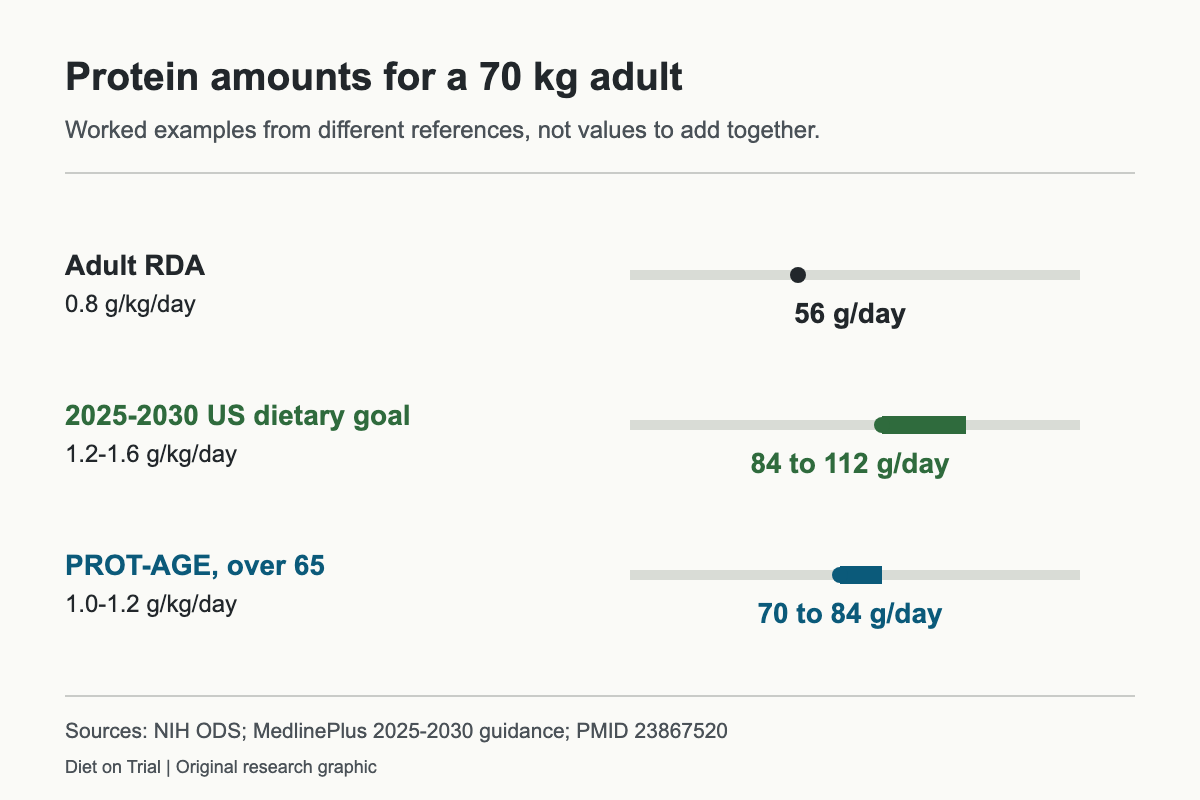
NIH's exercise and athletic performance fact sheet identifies the adult Recommended Dietary Allowance as 0.8 g per kilogram of body weight per day. The 2025-2030 US dietary guidance summarized by MedlinePlus gives a higher goal of 1.2 to 1.6 g/kg/day.
Those figures should retain their source labels. Calling every one of them “the minimum” would conceal the difference between an allowance and a dietary goal. They also refer to grams of protein, not the weight of a piece of meat or a serving of beans.
| Reference | Amount | Worked example for 70 kg |
|---|---|---|
| Adult RDA, reported by NIH ODS | 0.8 g/kg/day | 56 g/day |
| 2025-2030 US dietary goal | 1.2 to 1.6 g/kg/day | 84 to 112 g/day |
| PROT-AGE recommendation for adults over 65 | 1.0 to 1.2 g/kg/day | 70 to 84 g/day |
The examples are arithmetic, not a prescription for a particular reader. The figures should not be added together.
Protein needs after 50
Turning 50 does not automatically place someone in every “older adult” study. The PROT-AGE position paper specifically discusses adults over 65 and recommends 1.0 to 1.2 g/kg/day to support lean body mass and function. It also emphasizes appropriate physical activity. This is an expert recommendation from 2013, not a trial establishing a sudden change in needs on a particular birthday.
The paper identifies severe kidney disease in people not receiving dialysis as an exception: they may need to limit protein. A general high-protein target should not replace an existing kidney-treatment diet.
Is animal protein better than plant protein?
A 2021 review included 18 articles, with 16 in its meta-analysis. Protein source did not clearly change absolute lean mass or muscle strength overall, although some lean-mass outcomes favored animal protein, particularly in younger adults. Participants generally already consumed more protein than the RDA.
That study does not establish that everyone needs a protein powder or that every plant protein is interchangeable. It compares the interventions included in the trials, with specific participants and outcomes.
Health Canada's food guidance includes legumes, soy foods, nuts and seeds alongside animal foods. Its practical advice is to vary sources and compare sodium, sugar and saturated fat on packaged foods. A bean dish also contributes fiber; a protein isolate is a different food choice.
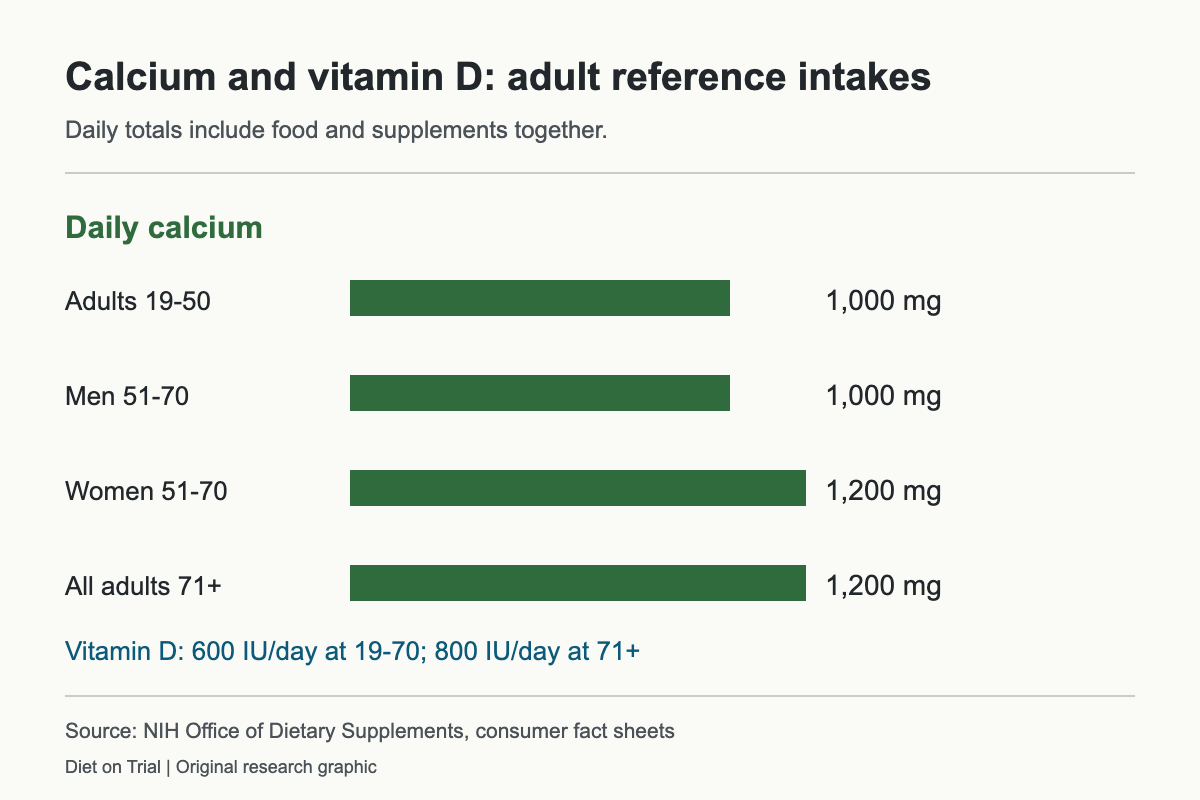
For someone removing milk, the dairy-free guide covers calcium and vitamin D alongside this protein question.
Frequently asked questions
Does 100 g of chicken mean 100 g of protein?
No. The weight of the food and the protein it contains are different quantities. Use the protein amount listed for the portion you eat.
Does the higher dietary goal replace a kidney diet?
No. Kidney disease can require different protein advice. Keep the protein target agreed with the clinician managing that condition.
Must all protein come from one source?
No. Legumes, soy foods, nuts, eggs, dairy, fish and meat can contribute across the day. Choose sources that also fit the other nutrient needs of the meal.