On this page
Controlled trials support a modest reduction in LDL cholesterol with tree nuts. They do not establish a single best nut for every reader. Evidence about cholesterol also needs to be kept separate from evidence about heart attacks: the major Mediterranean trial changed the whole diet as well as supplying nuts.
How much did LDL cholesterol change?
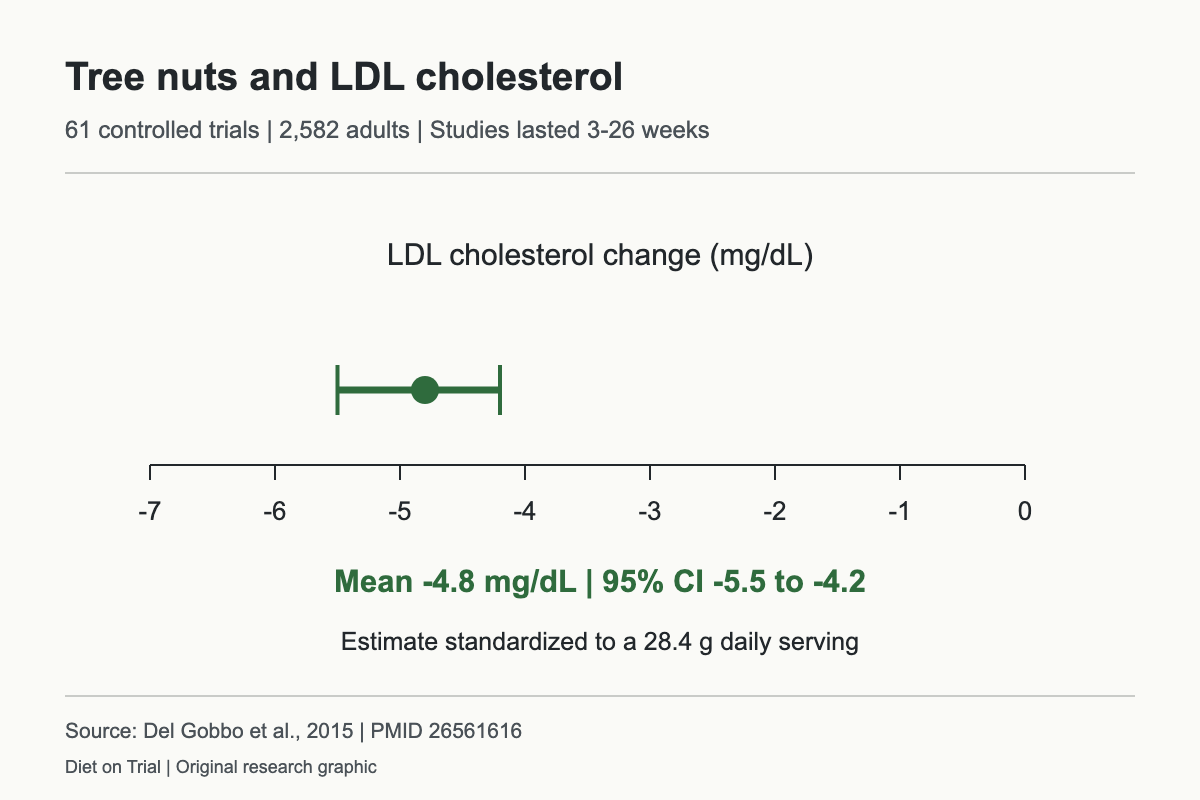
A meta-analysis of 61 controlled trials included 2,582 adults, with interventions lasting three to 26 weeks. The researchers standardized estimates to a daily 28.4 g serving of tree nuts.
LDL cholesterol fell by an average of 4.8 mg/dL compared with control, with a 95% confidence interval from 4.2 to 5.5 mg/dL lower. Total cholesterol, apolipoprotein B and triglycerides also decreased. The analysis did not find statistically significant differences in effect according to nut type.
The serving-standardized estimate is a pooled research result. It does not mean every person eating exactly that amount will get an identical cholesterol reduction.
Did the trials count heart attacks?
Many short food studies measure risk factors. A 2015 Cochrane review used narrower inclusion criteria: randomized nut interventions lasting at least three months. It included five trials with 435 participants, and none reported cardiovascular events.
That review and the 61-trial analysis should not be described as if they contain the same set of studies. Their methods and questions differ. A reduction in LDL is relevant, but it is not itself a recorded reduction in heart attacks in those trials.
| Evidence | What can be concluded |
|---|---|
| Short controlled nut trials | Effects on measured blood lipids under the study conditions |
| Trials reporting cardiovascular events | Whether those events differed during follow-up |
| Whole Mediterranean diet plus nuts | Effects of that combined dietary intervention |
Where does PREDIMED fit?
The corrected PREDIMED report recorded 83 major cardiovascular events in the Mediterranean-plus-nuts group, or 3.4%, compared with 109 events, or 4.4%, in the control group. Those are observed event proportions, not an adjusted relative-risk calculation.
Because the intervention included a Mediterranean dietary pattern and dietary guidance, its result cannot be credited to nuts alone. The full PREDIMED guide describes the population, follow-up and corrected analysis.
Choosing nuts for everyday meals
Health Canada advises choosing nuts and seeds without added salt, sugar or oils, and nut butters with little or no added sodium, sugar or saturated fat. That gives a useful product distinction without inventing a ranking among walnuts, almonds and pistachios.
Choose a nut you can eat and use regularly, and compare what has been added to it. The evidence does not justify buying a more expensive variety solely because it is described as the best for the heart. A known nut allergy also changes the food choice; a pooled nutrition result is not permission to eat an allergen.
Frequently asked questions
Are walnuts proven better than almonds for LDL?
The cited 61-trial analysis did not find statistically significant differences by nut type. It does not support that ranking.
Does a cholesterol change prove fewer heart attacks?
No. A trial needs to count cardiovascular events to measure that outcome directly.
Are nuts a substitute for prescribed cholesterol medicine?
These food studies did not test stopping prescribed treatment. Do not stop or change prescribed cholesterol medicine without talking with your doctor.