On this page
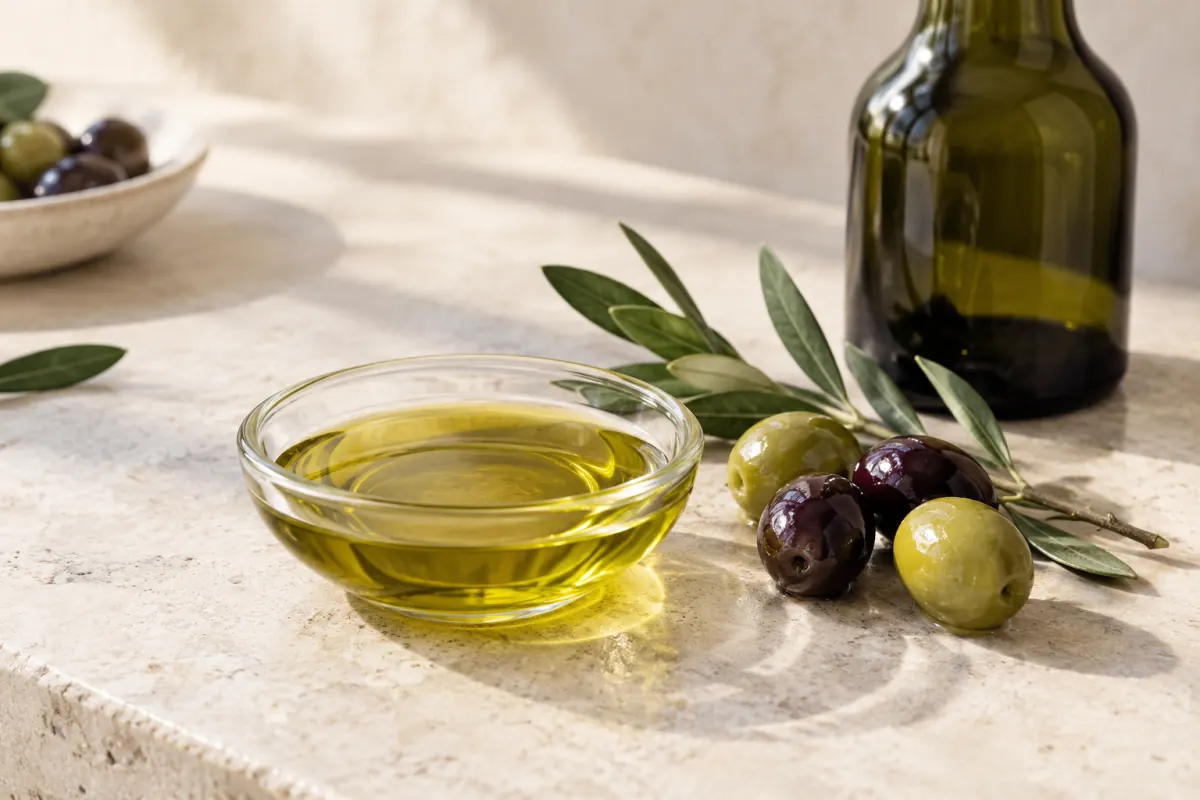
Olive oil research includes two different kinds of comparison: oils with different phenolic contents, and whole Mediterranean diets supplemented with olive oil. The first can test blood-marker changes at a fixed dose. The second can test the eating pattern over time, but cannot assign its entire effect to the oil alone.
What did EUROLIVE give participants?
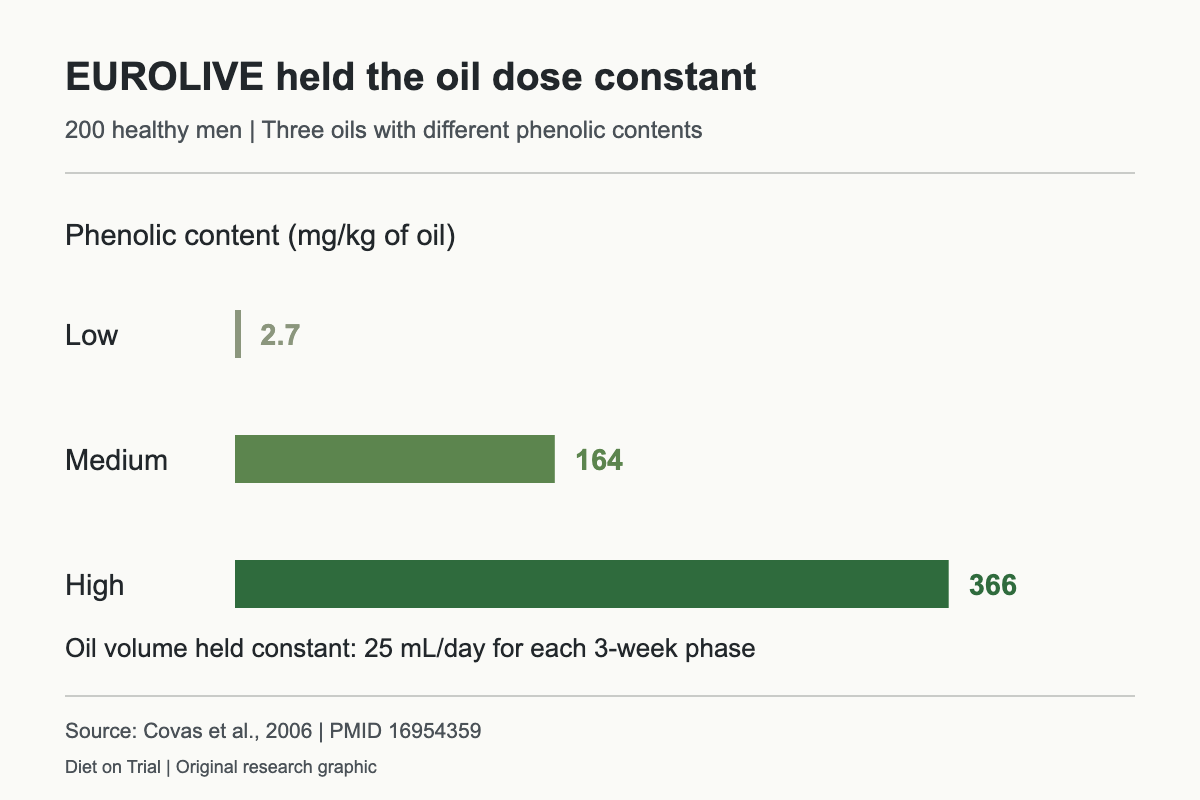
The EUROLIVE trial enrolled 200 healthy men at six centers in five European countries. Each intervention used 25 mL of oil a day for three weeks, with washout periods between phases. The oils were otherwise similar but had different phenolic contents.
| Study oil | Phenolic content |
|---|---|
| Low | 2.7 mg per kg of oil |
| Medium | 164 mg per kg of oil |
| High | 366 mg per kg of oil |
Higher phenolic content was associated with more favorable changes in HDL cholesterol and markers of lipid oxidation. The study measured laboratory risk factors over short periods. It did not count long-term heart attacks or establish a universal treatment dose.
“25 mL a day” describes the study exposure. It should not be presented as a prescription for everyone reading about olive oil.
Why does oil composition matter?
A separate report in 30 volunteers compared virgin, common and refined oils in three-week crossover phases, again using 25 mL daily. Oils richer in phenolic compounds increased the phenolic content of LDL. The researchers linked this finding with changes in susceptibility to oxidation.
That is a more specific result than saying olive oil “cleans arteries.” LDL composition, oxidized LDL and the number of cardiovascular events are different measurements. A favorable result for one is not a direct count of another.
For the same reason, an oil's name alone does not tell you that it matches the trial oils' measured composition. A product comparison would need reliable information about the actual oils being compared.
How is PREDIMED different?
The corrected 2018 PREDIMED report followed 7,447 adults at high cardiovascular risk for a median of 4.8 years. It compared Mediterranean diets supplemented with extra-virgin olive oil or nuts against advice to reduce dietary fat, and counted major cardiovascular events.
The intervention included dietary guidance as well as the supplied foods. Its results concern that combined approach. The original report was withdrawn and replaced after allocation problems were identified; use the corrected version when discussing the findings.
The Mediterranean diet guide explains the event results and the corrected analysis. It also distinguishes oil provided for participants and their families from an individual's intake. A weekly household supply should never be converted silently into a personal daily dose.
Frequently asked questions
Does EUROLIVE prove fewer heart attacks?
No. It measured lipid and oxidation markers over short intervention periods. PREDIMED studied cardiovascular events in a different population and dietary intervention.
Can the PREDIMED result be attributed entirely to olive oil?
No. Participants changed the broader dietary pattern and received guidance. The trial did not isolate olive oil from every other change.
Were the three EUROLIVE oils given in different amounts?
No. The daily oil volume was held at 25 mL while phenolic content differed. That distinction is what made the comparison informative.