On this page
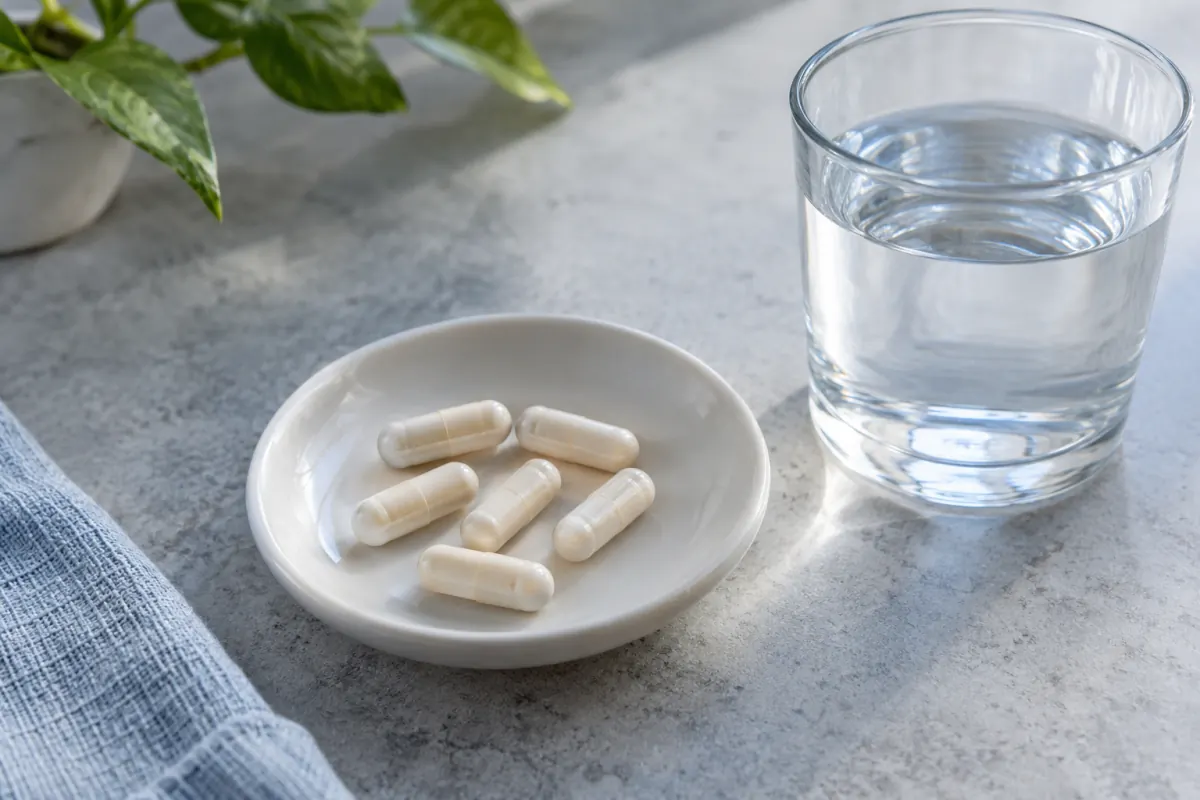
Oral NMN raises blood NAD in several human trials. Yi 2023 measured total serum NAD (NAD+ plus NADH), which rose from 7.95 to 45.3 nM at 600 mg a day. Effects on health measures are mixed: muscle insulin sensitivity rose 25% in one 10-week trial of 25 women, gait speed improved in one small trial of older men, but several trials found no change in muscle strength, walking speed or metabolism. Doses up to 2,000 mg a day for 28 days and 250 mg a day for 24 weeks were well tolerated.
What is NMN and why do people take it?
Nicotinamide mononucleotide (NMN) is a building block the body uses to make NAD+. A 2021 review (Covarrubias 2021) describes NAD+ as a coenzyme for redox reactions, central to energy metabolism, and an essential cofactor for sirtuins, CD38 and PARP enzymes. In the main pathway, nicotinamide is converted to NMN, and NMN is then converted to NAD+ (Yoshino 2021).
The same review states that tissue NAD+ declines gradually with age in several species, including rodents and humans, and that much remains to be learnt about its role in human health. Human data agree: NAD+ in pelvic skin from 49 people aged 0 to 77 fell with age in males (r = -0.706, p = 0.001) and females (r = -0.537, p = 0.01) (Massudi 2012), and brain imaging (Zhu 2015) and plasma (Clement 2019) showed similar declines.
Interest in NMN grew from a mouse study. Twelve months of oral NMN in normally ageing mice suppressed weight gain and improved insulin sensitivity, plasma lipids and eye function (Mills 2016). A 2023 human review (Freeberg 2023) found that NAD+ boosters are safe and raise NAD+, but that the clinical evidence for better physiological function is unclear.
What did the human trials test?
The table covers 14 trials of oral NMN in healthy or at-risk adults. All used a placebo comparison except the single-dose study by Irie 2020. Two newer trials, Christen 2026 and Yang 2026, are discussed later in the article. Doses ranged from 100 mg once to 2,000 mg a day, and durations from 5 hours to 24 weeks.
| Study | People | Dose and length | Main result |
|---|---|---|---|
| Irie 2020 | 10 healthy men, not randomized | Single doses of 100, 250 and 500 mg, followed for 5 hours | No significant symptoms or changes in heart rate, blood pressure, oxygen saturation or body temperature |
| Yoshino 2021 | 25 postmenopausal women with prediabetes | 250 mg a day, 10 weeks | Muscle insulin sensitivity +25 ± 7%; no change in muscle NAD+ |
| Liao 2021 | 48 recreational runners | 300, 600 or 1,200 mg a day, 6 weeks | Ventilatory threshold measures rose at 600 and 1,200 mg; VO2max unchanged |
| Kim 2022 | 108 adults aged 65 and older | 250 mg a day, morning or evening, 12 weeks | Chair-stand time improved in all groups, placebo included |
| Okabe 2022 | 30 healthy adults | 250 mg a day, 12 weeks | Whole-blood NAD+ rose; adverse events 8 of 15 vs 7 of 15 |
| Igarashi 2022 | 42 men aged 65 and older (20 in the week-12 analysis after a supplement-distribution error) | 250 mg a day, up to 12 weeks | Blood NAD+ rose; gait speed 1.60 vs 1.30 m/s at week 12, an exploratory result |
| Fukamizu 2022 | 31 healthy adults aged 20 to 65 | 1,250 mg a day, up to 4 weeks | No changes beyond physiological variation; no severe adverse events |
| Huang 2022 | 66 healthy adults aged 40 to 65 | 300 mg a day, 60 days | Serum NAD+/NADH +38% vs +14.3% with placebo; the between-group difference was not significant |
| Pencina 2023 (JGA) | 32 overweight or obese adults aged 55 to 80 | MIB-626 1,000 mg once or twice a day, 14 days | Blood NAD rose in a dose-related way |
| Pencina 2023 (JCEM) | 30 overweight or obese adults aged 45 and older | MIB-626 2,000 mg a day, 28 days | Weight -1.9 kg; LDL -18.73 mg/dL; insulin sensitivity unchanged |
| Yi 2023 | 80 healthy adults aged 40 to 65 | 300, 600 or 900 mg a day, 60 days | Total serum NAD rose in all NMN groups; 6-minute walk longer; HOMA-IR not different from placebo |
| Akasaka 2023 | 14 men aged 65 and older with diabetes and weak grip or slow walking | 250 mg a day, 24 weeks | No change in grip strength or walking speed |
| Katayoshi 2023 | 36 healthy adults aged 40 to 59 | 250 mg a day, 12 weeks | Pulse wave velocity tended to fall, not significantly |
| Morifuji 2024 | 60 older adults | 250 mg a day, 12 weeks | Primary stepping test: no difference |
MIB-626 is a microcrystalline form of NMN. The FDA states that NMN and MIB-626 have the same chemical structure and are the same article.
Does NMN raise NAD+?
Several trials found increases in blood NAD, though they measured different forms. Okabe 2022 and Igarashi 2022 measured NAD+, while Yi 2023 measured total serum NAD, including NADH. Huang 2022 reported a rise in serum NAD+/NADH from baseline but no significant difference from placebo at day 60.
In Yi 2023, total serum NAD (NAD+ plus NADH) in the 600 mg group went from 7.95 ± 3.29 to 45.3 ± 11.8 nM over 60 days, and in the 300 mg group from 11.8 ± 11.7 to 32.6 ± 17.9 nM. Placebo moved from 8.11 ± 5.16 to 11.8 ± 9.4 nM. The 600 mg and 900 mg groups did not differ statistically, and the authors concluded that the effect peaks at 600 mg a day.
Pencina 2023 (JGA) measured NMN itself on day 14. Blood NMN exposure was 1.7 times baseline at 1,000 mg once daily and 3.7 times baseline at 1,000 mg twice daily. In 42 hospitalized adults with COVID-19 and acute kidney injury, MIB-626 at 1.0 g twice daily raised blood NAD+ from 16.0 ± 6.9 to 42.6 ± 25.6 μg/mL by day 14, yet kidney injury and inflammation markers did not differ from placebo (Pencina 2025).
A 2026 trial of 65 healthy participants (Christen 2026) compared nicotinamide riboside, NMN and nicotinamide for 14 days. Riboside and NMN, but not nicotinamide, raised circulating NAD+ comparably. The same study found that gut microbes convert both compounds to nicotinic acid in the lab.
Raising blood NAD+ did not raise it everywhere. In Yoshino 2021, muscle NAD+ and nicotinamide content did not change in either group after 10 weeks.
Does NMN improve metabolism, muscle or fitness?
Some trials found a gain. Others found none.
The positives, with their limits:
- Yoshino 2021: muscle insulin-stimulated glucose disposal was 25 ± 7% higher after NMN (p < 0.01) and unchanged with placebo. A published comment (Brenner 2021) noted that at baseline the NMN group had liver fat of 6.3 ± 1.2% against 14.8 ± 2.0% in the placebo group (P = 0.003), and called the trial not effectively randomized.
- Igarashi 2022: gait speed at week 12 was 1.60 ± 0.13 m/s with NMN against 1.30 ± 0.22 m/s with placebo (10 people per group, P = 0.002). A supplier had mistakenly switched the supplements for 22 of the 42 participants at week 6, so their week-12 data were excluded. The remaining groups already differed in gait speed at baseline (1.50 vs 1.31 m/s), so the week-12 comparison alone does not measure the treatment effect. Repeated-measures analyses favored NMN, but the authors treated the findings as exploratory and did not correct for multiple comparisons.
- Liao 2021: oxygen uptake, percent VO2max and power at both ventilatory thresholds rose more at 600 and 1,200 mg than with placebo. VO2max, O2-pulse and peak power did not change in any group. All runners trained 5 to 6 times a week.
- Yi 2023: six-minute walk distance rose from 290 ± 92 to 435 ± 104 m at 600 mg and from 323 ± 113 to 480 ± 128 m at 900 mg, against 325 ± 144 to 330 ± 117 m with placebo (all NMN groups p < 0.01).
The nulls:
- Yoshino 2021: body composition, liver fat, blood pressure, glucose, lipids, mitochondrial capacity, grip strength and muscle function did not change in either group.
- Pencina 2023 (JCEM): muscle strength, aerobic capacity, insulin sensitivity and liver fat did not differ from placebo, although body weight, diastolic blood pressure (-7.01 mmHg) and LDL cholesterol changed.
- Yi 2023: HOMA-IR showed no statistically significant difference against placebo at day 60.
- Akasaka 2023: grip change was 1.25 kg (95% CI -2.31 to 4.81) with NMN and -0.44 kg (-4.15 to 3.26) with placebo. The authors concluded NMN was safe but did not improve grip strength or walking speed.
- Morifuji 2024: the primary stepping test showed no difference at 4 or 12 weeks. Secondary measures (4-meter walk time, sleep questionnaire scores) favored NMN at 12 weeks.
- Kim 2022: chair-stand time improved in placebo groups too, so the gain cannot be credited to NMN alone.
A 2026 meta-analysis of 15 randomized trials found no statistically significant effect on body weight, BMI, fasting glucose, HbA1c, lipids or systolic blood pressure. Diastolic blood pressure fell slightly. The authors wrote: "Broad metabolic benefits were not evident."
One 2026 crossover trial raises a possible downside. In 11 untrained men taking 1,200 mg a day for 7 days, blood-flow-restricted exercise raised muscle mitochondrial content by 171% after 24 hours, and this adaptation was abolished with NMN (Yang 2026). The study was small and short, and no other trial here tested it.
Is NMN safe?
The trials so far support short-term safety at the doses tested. The highest dose was 2,000 mg a day of MIB-626, given for 14 days (Pencina 2023, JGA) and 28 days (Pencina 2023, JCEM), with adverse events similar to placebo. Fukamizu 2022 gave 1,250 mg once daily for up to 4 weeks with no severe adverse events. The longest trial ran 24 weeks at 250 mg a day (Akasaka 2023).
In Okabe 2022, any adverse event occurred in 8 of 15 NMN participants (53.3%) and 7 of 15 placebo participants (46.7%); none was serious. The 2026 meta-analysis (15 trials, 10 in the safety analyses, 250 to 2,000 mg a day, 14 days to 24 weeks) found no rise in overall, serious, withdrawal-related or system-specific adverse events, and no statistically significant rise in ALT or AST.
Two limits apply. The trials were short and mostly small, so rare or long-term effects remain unmeasured. And several trials were funded by, supplied by, or co-authored by employees of NMN makers or developers, among them Okabe 2022, Igarashi 2022, Fukamizu 2022, Huang 2022, Pencina 2023 and Yi 2023. Two of Yoshino 2021's authors disclosed patent-licensing fees or an NMN patent application. Liao 2021 and Katayoshi 2023 declared no conflicts.
People with a medical condition or who take medication should check any supplement with their doctor.
What did the FDA decide about NMN?
The FDA reversed its earlier position that the drug-exclusion provision kept NMN outside the dietary supplement definition. Its response to petition FDA-2023-P-0872 cites evidence of US supplement marketing as early as 2017, before NMN was authorized for investigation as a new drug.
That decision addresses one part of the law. In footnote 44, the FDA expressly rejects treating NMN categorically as a lawful dietary supplement. Products still have to meet the other applicable requirements. The response is not an approval of every NMN product or of its health claims.
Frequently asked questions
What dose of NMN was used in human studies?
The most common dose was 250 mg a day, used in 7 trials in the table. Others tested 300 mg (Huang), up to 1,200 mg (Liao), up to 900 mg (Yi), 1,250 mg (Fukamizu) and 2,000 mg a day of MIB-626 (Pencina). In Yi 2023, the 600 mg and 900 mg groups did not differ in total serum NAD.
How long does it take NMN to raise NAD+ levels?
Increases appeared within weeks. In Yi 2023, total serum NAD (NAD+ plus NADH) in all NMN groups was higher than placebo at day 30 and day 60 (all p ≤ 0.001). In Huang 2022, serum NAD+/NADH rose 11.3% by day 30 and 38% by day 60, but the day-60 difference from placebo was not significant. Christen 2026 found raised circulating NAD+ after 14 days.
Does NMN slow aging in people?
No trial in this review reported human lifespan as an outcome. The mouse study that drove interest (Mills 2016) found better metabolism over 12 months, but a 2023 review (Freeberg 2023) judged the human evidence for better physiological function unclear. In Yi 2023, a blood-based biological age estimate rose in the placebo group (39.8 to 45.4 years, p = 0.029) and stayed unchanged in NMN groups, a laboratory estimate, not a measure of how long people live.
Is NMN safe to take every day?
Daily dosing for 24 weeks at 250 mg was tolerated in Akasaka 2023, and doses up to 2,000 mg a day for 28 days showed adverse events similar to placebo. A 2026 review included 15 trials lasting up to 24 weeks; its safety analysis covered 10 trials and found no increase in adverse events, ALT or AST. No trial here tested longer use.
Sources
- Irie J, et al. Single oral doses of NMN in 10 healthy men (not randomized). Endocr J. 2020. PubMed 31685720
- Yoshino M, et al. Nicotinamide mononucleotide increases muscle insulin sensitivity in prediabetic women. Science. 2021. PubMed 33888596
- Brenner C. Comment on Yoshino et al. Science. 2021. PubMed 34326206
- Liao B, et al. Nicotinamide mononucleotide supplementation enhances aerobic capacity in amateur runners. J Int Soc Sports Nutr. 2021. PubMed 34238308
- Kim M, et al. 12-week NMN intake, sleep quality, fatigue and physical performance in older adults. Nutrients. 2022. PubMed 35215405
- Okabe K, et al. Oral administration of nicotinamide mononucleotide is safe and efficiently increases blood NAD levels in healthy subjects. Front Nutr. 2022. PubMed 35479740
- Igarashi M, et al. Chronic nicotinamide mononucleotide supplementation elevates blood NAD levels and alters muscle function in healthy older men. NPJ Aging. 2022. PubMed 35927255
- Fukamizu Y, et al. Safety evaluation of beta-nicotinamide mononucleotide oral administration in healthy adult men and women. Sci Rep. 2022. PubMed 36002548
- Huang H. Multicentre, randomised, double blind, placebo-controlled study of an NMN supplement in middle-aged and older adults. Front Aging. 2022. PubMed 35821806
- Pencina KM, et al. MIB-626, an oral formulation of a microcrystalline polymorph of beta-nicotinamide mononucleotide, increases circulating NAD in middle-aged and older adults. J Gerontol A Biol Sci Med Sci. 2023. PubMed 35182418
- Pencina KM, et al. Nicotinamide adenine dinucleotide augmentation in overweight or obese middle-aged and older adults: a physiologic study. J Clin Endocrinol Metab. 2023. PubMed 36740954
- Yi L, et al. The efficacy and safety of beta-nicotinamide mononucleotide supplementation in healthy middle-aged adults: a randomized, multicenter, double-blind, placebo-controlled, parallel-group, dose-dependent clinical trial. GeroScience. 2023. PubMed 36482258
- Akasaka H, et al. Effects of nicotinamide mononucleotide on older patients with diabetes and impaired physical performance. Geriatr Gerontol Int. 2023. PubMed 36443648
- Katayoshi T, et al. NAD metabolism and arterial stiffness after long-term nicotinamide mononucleotide supplementation. Sci Rep. 2023. PubMed 36797393
- Morifuji M, et al. Ingestion of beta-nicotinamide mononucleotide increased blood NAD levels, maintained walking speed, and improved sleep quality in older adults. GeroScience. 2024. PubMed 38789831
- Pencina KM, et al. MIB-626 in hospitalized adults with COVID-19 and acute kidney injury. FASEB Bioadv. 2025. PubMed 40746868
- Christen S, et al. Nicotinamide riboside, NMN and nicotinamide supplementation in healthy adults. Nat Metab. 2026. PubMed 41540253
- Yang DL, et al. NMN and muscle adaptation after blood-flow-restricted exercise (crossover). J Int Soc Sports Nutr. 2026. PubMed 41705654
- Yang W, et al. Safety and metabolism-related outcomes of oral nicotinamide mononucleotide supplementation in adults: a systematic review and meta-analysis. Nutrients. 2026. PubMed 42514320
- Covarrubias AJ, et al. NAD+ metabolism and its roles in cellular processes during ageing. Nat Rev Mol Cell Biol. 2021. PubMed 33353981
- Massudi H, et al. Age-associated changes in oxidative stress and NAD+ metabolism in human tissue. PLoS One. 2012. PubMed 22848760
- Zhu XH, et al. In vivo NAD assay reveals the intracellular NAD contents and redox state in healthy human brain and their age dependences. PNAS. 2015. PubMed 25730862
- Clement J, et al. The plasma NAD+ metabolome is dysregulated in "normal" aging. Rejuvenation Res. 2019. PubMed 30124109
- Mills KF, et al. Long-term administration of nicotinamide mononucleotide mitigates age-associated physiological decline in mice. Cell Metab. 2016. PubMed 28068222
- Freeberg KA, et al. Dietary supplementation with NAD+-boosting compounds in humans: current knowledge and future directions. J Gerontol A Biol Sci Med Sci. 2023. PubMed 37068054
- FDA Human Foods Program. Response letter to the Natural Products Association and Alliance for Natural Health USA, Docket FDA-2023-P-0872